

Saturday morning, in the courtyard between my office pod and the kitchen.
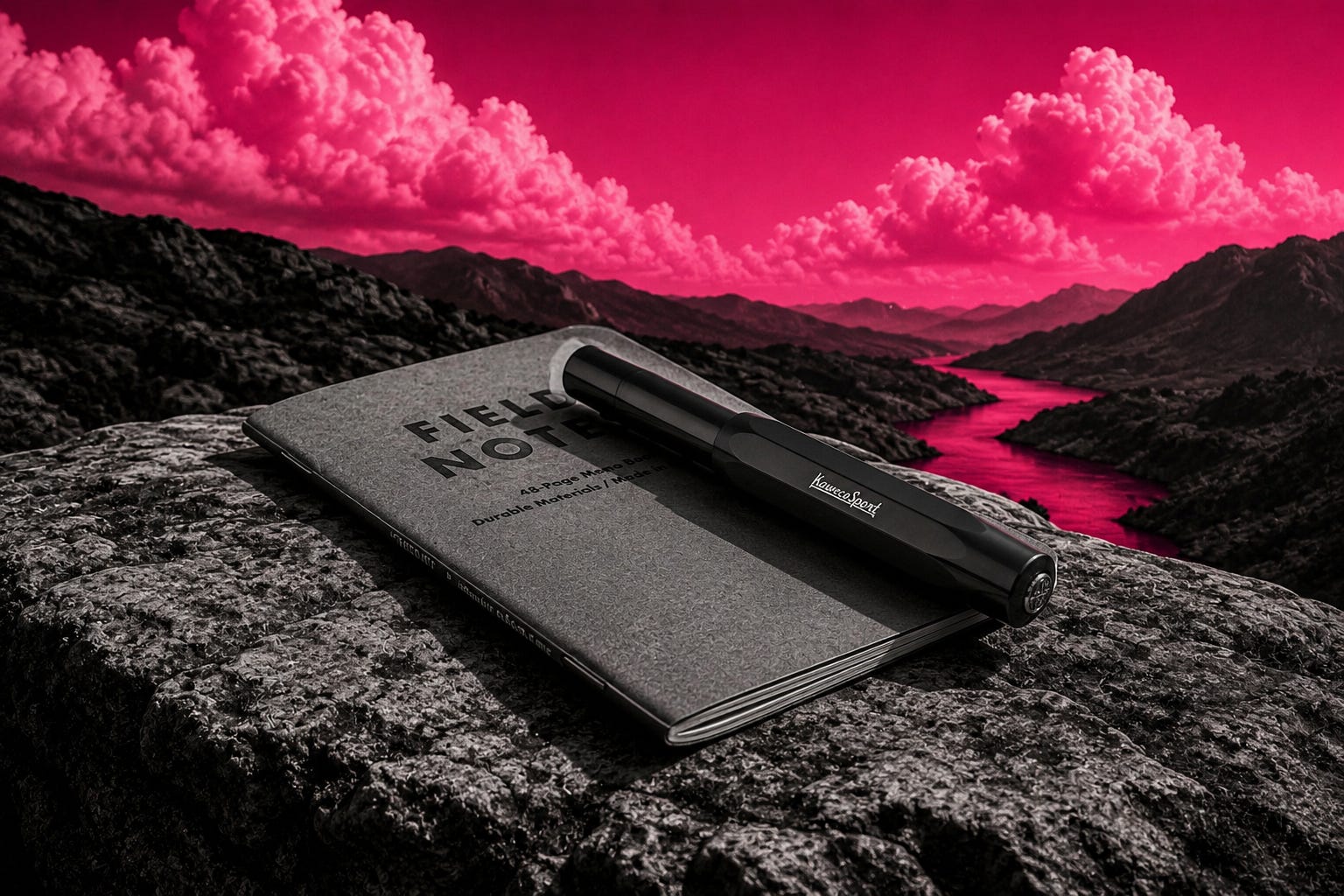
Nag Champa burning. A flat white in the husk cup. My partner three feet away doing their own thing, neither of us talking, both of us better for the company. And on the table, two pocket notebooks and a fountain pen the colour of a warning sign.
That table is where my business actually runs. Which is a strange thing to admit, because on paper I am the most AI-fluent ghostwriter you are likely to meet.
I build voice systems. I train writing engines on the way real people speak. There is more machine under my desk than in most agencies.
And the moat is a notebook.
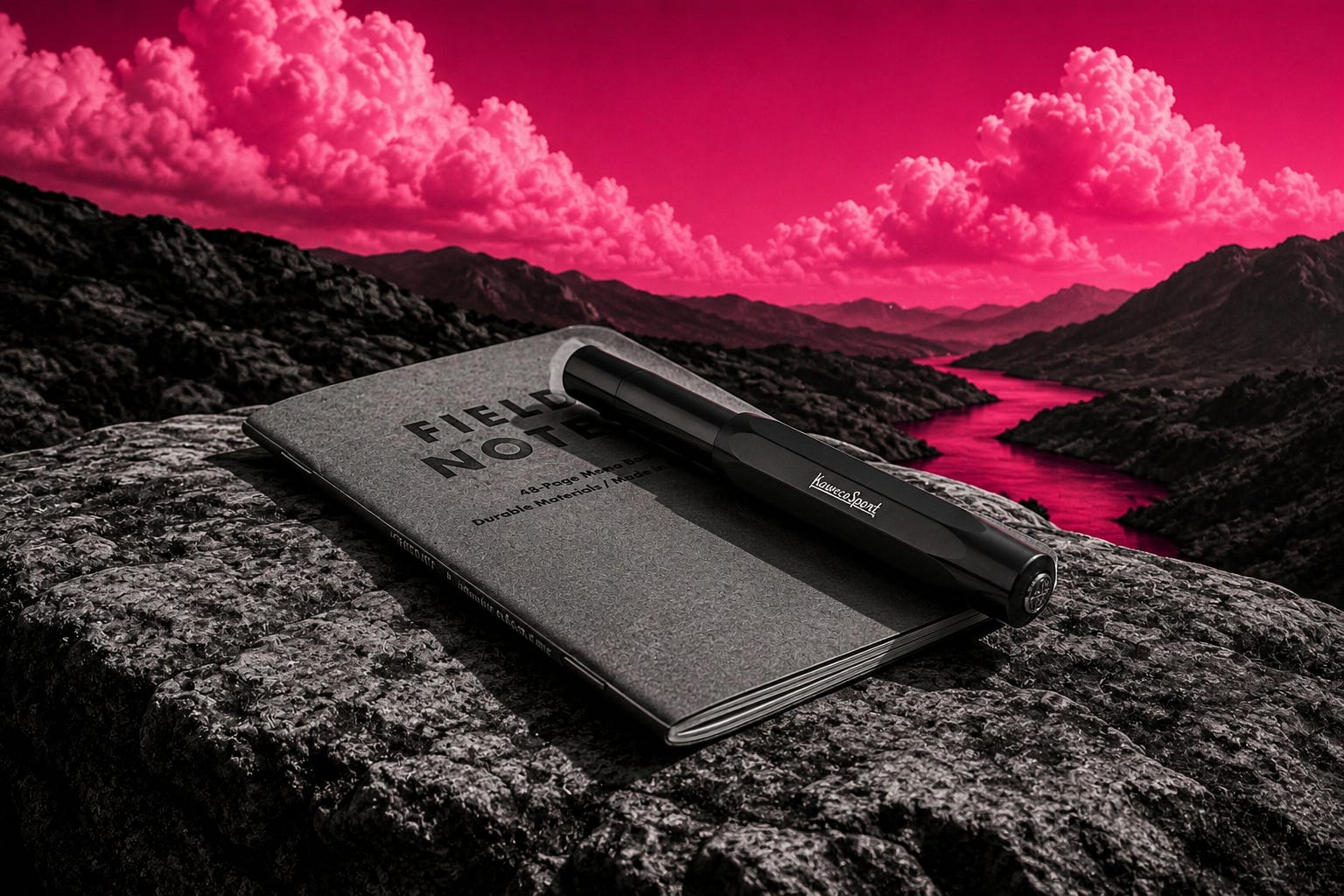
Two, in fact. Both Field Notes, both with me everywhere I go, riding in my carrier next to the bank cards.
The first one is my commonplace book. If that phrase is new to you, it should not be, because it built more of the world than most software has. Marcus Aurelius kept one. So did Darwin, Jefferson, and every serious writer for four centuries.
It is where you keep other people's brilliance: the quote that stopped you, the idea that caught, the person you want to study. Written by hand. Attributed. Mine also holds stranger things. A list of people I might buy gifts for one day, with the perfume they wear. A rule that anything I want to buy sits on a wait list for seven days before I am allowed to decide. The first laws I would pass if they made me prime minister. (Some of them are even sensible.)
The second book runs my world. A BUJO Short lines, date stamp at the top, what needs doing and who needs remembering. Nothing clever. That is the point of it.
The handwriting in both is a crime scene. It looks like a wild man got hold of the end of the world's plans and scribbled them down at speed. And that mess is doing something no app of mine can do.
Writing by hand commits things. The memory researchers have a name for it, the generation effect: what you produce with your own hand encodes deeper than anything you scroll past. I did not learn that from a paper. I learned it at seventeen, in Glastonbury, where I lived long enough to learn to see past the obvious. The science just turned up later to agree with me.
Because your head is for thinking, not for storing information. Every task, every quote, every half-idea you are carrying up there is renting space your thinking needs. Put it in the book and the space comes back.
The book does not forget, does not need charging, and does not show you an advert halfway through.
Now the part that matters if you make your living being trusted.
The machine can draft. It can polish. It can flood every feed you own with fluent, identical noise by breakfast. What it cannot do is notice.
It was not on the call when your client answered the hard question sideways.
It did not catch the word they keep reaching for when they talk about the work they love.
It has never smelled the incense, never waited seven days to want something less.
The noticing is the job. The typing was never the job.
So when people ask how a ghostwriter survives the age of AI, I hold up a £25 pen.
Everyone tells you how to journal. Nobody teaches you. The tools want your attention back. The books give it back.
Reply and tell me what you still trust to paper. I collect those, in pink ink, attributed.
- Sarra : AIG